


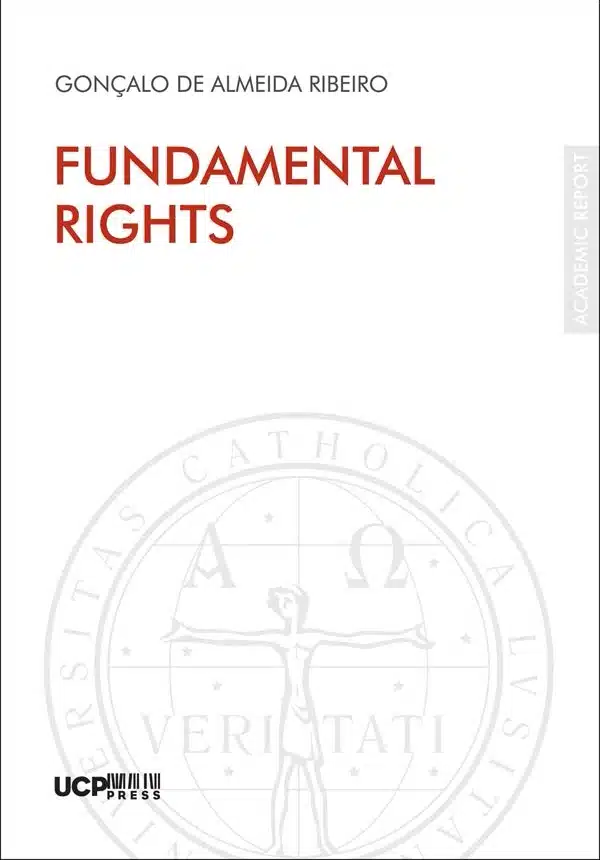
Fundamental Rights
Programme, Content, and Methods of an Innovative CourseO preço original era: 22.00€.19.80€O preço atual é: 19.80€.
Disponível por encomenda a fornecedor
Fundamental Rights
What is taught in Fundamental Rights is not particular to Portuguese law or German law or the law of the United States, and neither is it to the European Union, the Council of Europe, or the United Nations. It is a language spoken across these and many other systems, a language which students are invited to learn and master.
It is a common stock of problems, values, theories, concepts, and techniques. To be sure, an understanding of this seemingly elusive ius commune will not make an aspiring jurist an expert in local legal practice or proficient in handling the contingencies of a jurisdiction.
Abstract
In this book, originally written as an academic report on an innovative course in the law school curriculum, Gonçalo de Almeida Ribeiro introduces, advocates, and unpacks the idea of a transnational approach to fundamental rights, focused on the common ground among national, regional, and international jurisdictions within the realm of liberal democratic constitutionalism. The book serves a threesfold function as a scholarly meditation, a pedagogic proposal, and a study guide.
INTRODUCTION
CHAPTER ONE: PROGRAMME OF THE COURSE
1. The Syllabus
2. A Transnational Approach
3. The Case for Modest Universalism
A. The Ontological Argument
B. The Functional Argument
C. The Hermeneutic Argument
D. The Historical Argument
4. Course Outline
CHAPTER TWO: CONTENT OF THE COURSE
1. Philosophical Foundations
A. Human Dignity
B. Public Reason
C. Political Legitimacy
2. General Theory
A. Function and Structure of Rights
B. Limitations on Fundamental Rights
C. The Force of Fundamental Rights
3. Special Doctrines
A. Horizontal Effect
B. The Right to Equality
C. The Rule of Law
4. Judicial Protection
A. Systems of Judicial Review
B. Standards of Judicial Review
C. Levels of Judicial Review
CHAPTER THREE: METHODS OF THE COURSE
1. Prolegomena
2. The Three Methods
A. The Case Method
B. The Dialectical Method
C. The Systematic Method
3. Course Mechanics
BIBLIOGRAPHY
Coleção Biblioteca de Investigação
Apenas clientes com sessão iniciada que compraram este produto podem deixar opinião.
Produtos Relacionados
Direito

Direito

Direito

Avaliações
Ainda não existem avaliações.